
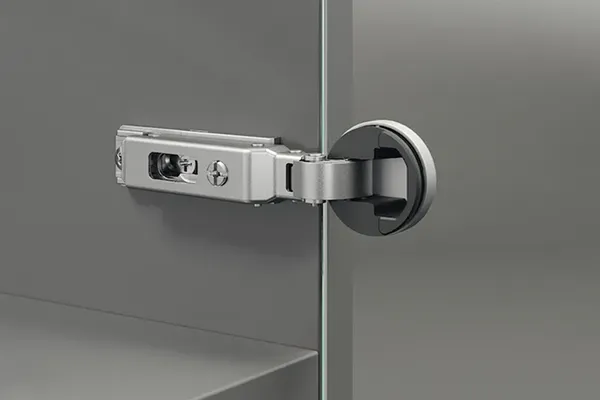

Proper door hinge installation plays a very important role in the smooth operation, longevity of the door and even the security of the building. Many problems such as sagging doors, annoying noises, not closing completely or premature failure of the fittings are caused by simple but common mistakes during hinge installation. In this article, we will examine 5 common mistakes in door hinge installation and basic solutions to avoid them.
1. Choosing the wrong hinge for the weight and type of door
One of the most common mistakes is using hinges that are not selected according to the weight, material, and dimensions of the door. Heavy doors, such as thick wooden, metal, or burglar-proof doors, require reinforced and more durable hinges.
Prevention Method:
Before installing, determine the approximate weight of the door and its intended use. For heavy doors, use ball-bearing or reinforced hinges, and for light interior doors, use regular or cushion hinges. Choosing the right hinge from the start will prevent sagging and premature failure.
2. Misalignment of the hinges during installation
Installing hinges without precise alignment will cause the door to not open and close properly and will put unbalanced pressure on the hardware. This problem can lead to wear, squeaking, and even hinge breakage in the long run.
Prevention method:
When installing, be sure to use a hand level or laser level and measure the distance of the hinges from the top and bottom edges of the door accurately and to a standard. Accuracy in alignment is one of the most important principles of professional hinge installation.
3. Using substandard or inappropriate screws
Many installers do not pay enough attention to the quality of the screws and use weak or short screws. This causes the hinge to loosen in a short time and the door to sag.
Prevention method:
Use high-quality steel screws that are appropriate for the frame material (wood, metal, or MDF). Also, the length of the screw should be long enough to fit well into the frame and provide the necessary strength.
4. Incorrect spacing between hinges
Installing hinges with non-standard spacing is another common mistake. If the hinge spacing is too high or too low, the weight of the door will not be distributed properly and too much pressure will be placed on one point.
Prevention method:
Typically, the top hinge should be installed about 15 to 20 cm from the top edge of the door and the bottom hinge should be installed 20 to 25 cm from the bottom edge. For tall or heavy doors, it is recommended to use a third hinge in the middle.
5. Ignoring the type of use and the direction of door opening
Sometimes hinges are installed without considering the direction the door opens (left or right) and the amount of traffic. This mistake can cause limited opening, the door hitting the wall, or rapid wear of the hinge.
Prevention method:
Before installing, check the opening direction of the door and the space around it. Choose the hinge direction according to the design of the space and the amount of daily use. For high-traffic doors, it is recommended to use more resistant hinges or a damper.
Conclusion
Although installing door hinges may seem simple at first glance, failure to follow technical principles can cause numerous problems. By choosing the right hinge, using precise tools, observing standard distances, and paying attention to the type of door's use, many of these mistakes can be avoided.
If you're looking for smoother operation, greater durability, and reduced repair costs in the future, take proper hinge installation seriously, as these small details make a big difference in the final quality of the door.